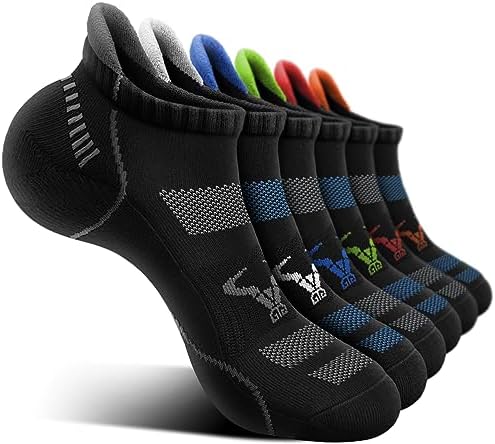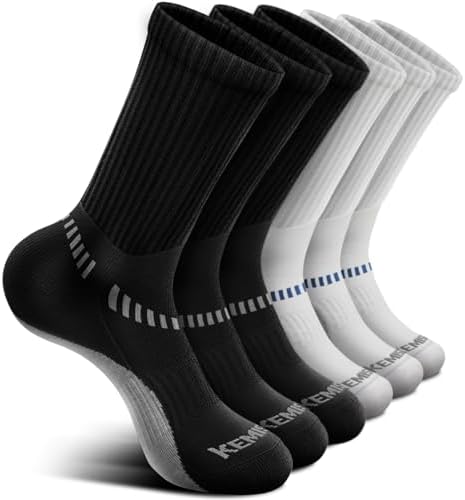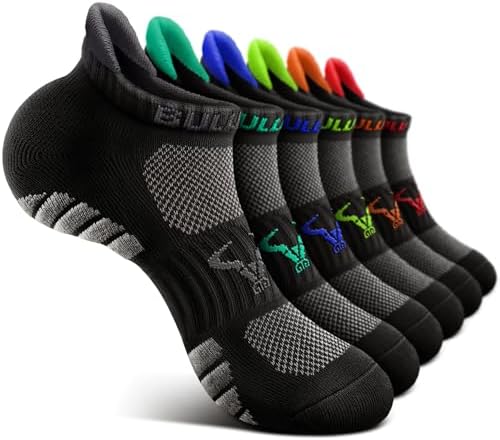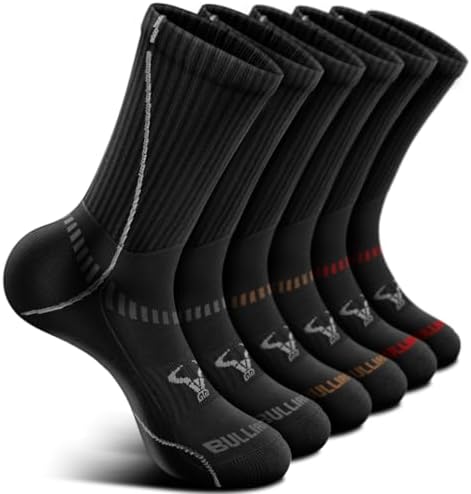
Socks
What the cushioning in an athletic sock is actually doing
A cushioned sock puts more yarn between the bottom of the foot and the inner sole of the shoe. We knit those extra loops directly into the knit bed, and they change how your shoe fits.
Loops of yarn under the foot
We build athletic socks with added loops of yarn running along the underside. The top of the sock stays thin and flat, while the bottom carries a deep terry pile from the heel through to the toes. This is what cushioning means in knitwear. It is simply more thread per square inch on the surface that touches the shoe.
The extra depth is easy to see if you turn the sock inside out. Instead of a smooth weave, you see rows of upright yarn loops standing away from the backing structure. Those loops compress when pressed flat, then spring partway back when the shoe lifts off the ground.
How thick socks change shoe volume
A cushioned sock takes up room inside a shoe that a thin sock does not. When you slide into a sneaker that fits closely over a dress sock, adding a dense terry bottom pushes the foot upward into the tongue and the lacing cage. The interior space shrinks by the thickness of the compressed yarn.
If a pair of running shoes already sits tight across the top, thick cushioning makes them tighter. We make 26 of our socks with this terry structure underfoot, so the difference in internal shoe volume is real. You trade empty interior space for a thicker layer of yarn beneath you.
Why hot dryers crush the pile
Terry loops stay springy because the individual strands of yarn keep their curved shape. High heat in a tumble dryer relaxes and bakes the yarn flat over time. Once those loops mat together and lose their loft, the sole becomes a dense, hard pad instead of an open bed of cushion.
We knit synthetic strands into the cotton to keep the loops standing, but boiling heat defeats the knit. Washing in warm water and drying on a cooler cycle leaves the loops open. When the pile stays open, the sock retains its full depth across weeks of wear.
Sizing across the catalogue
Unlike our belts, socks are sized by shoe size, not by waist. The knit has to stretch around the heel without pulling the front seams tight against your toes. If you pick a size too small, the cushioning loops get pulled sideways and lose their natural vertical depth before you even step down.
Matching the sock bracket to your actual shoe length keeps the pile sitting directly under the strike points. The thick zone stays where we placed it, under the heel and the ball, instead of creeping up the back of the heel counter or bunching under the arch.
A cushioned sole is extra yarn taking up space in a shoe, nothing more complicated than that.